
Article: Inspiring Women – Iris Muñoz: Memory, Motherhood And The Art Of Intimate Photography
Inspiring Women – Iris Muñoz: Memory, Motherhood And The Art Of Intimate Photography
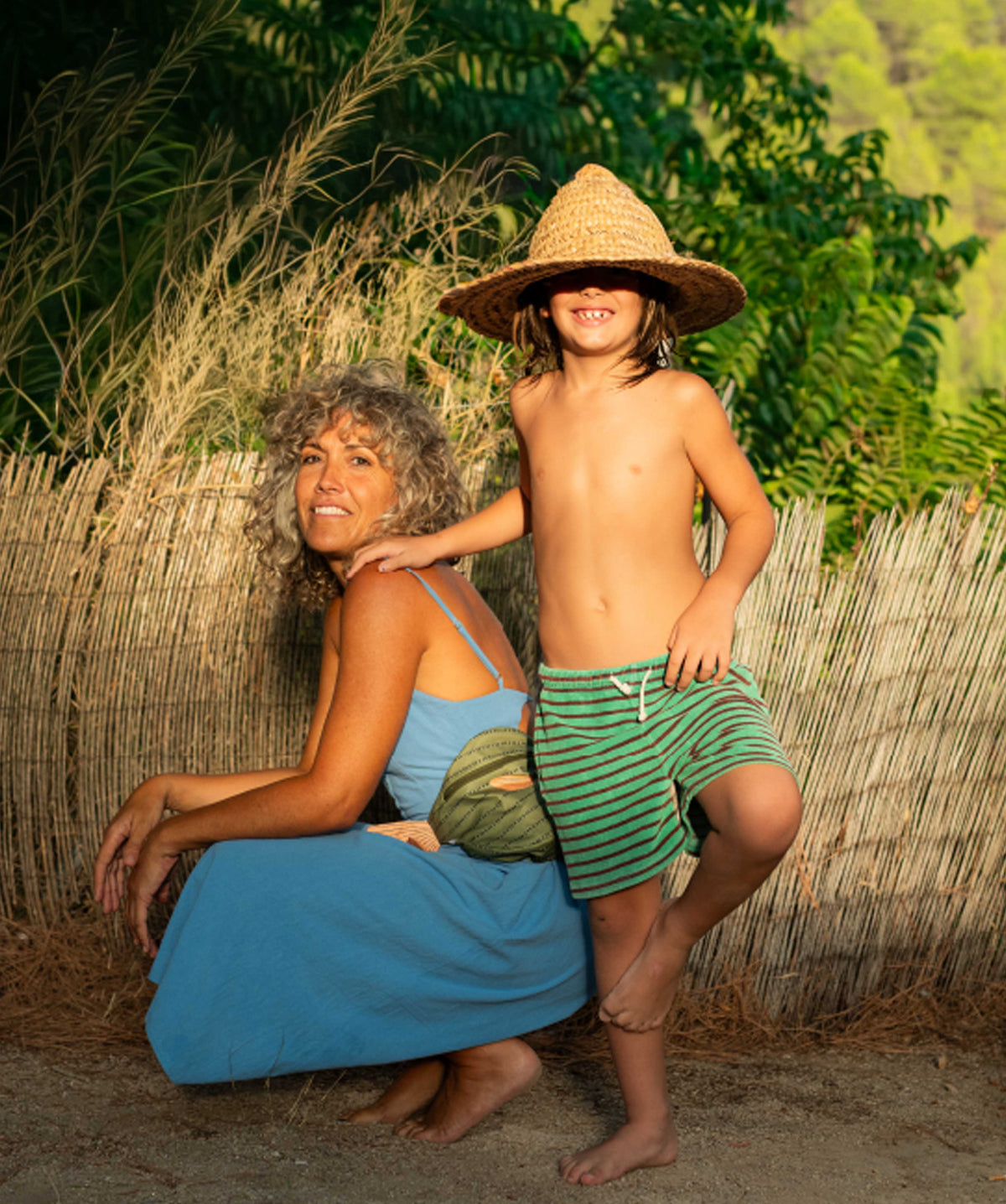
Today, Captain Don Fisher’s ship approaches a particularly sensitive gaze: that of Iris Muñoz, a maternity and family photographer working between Barcelona and Madrid. Through film and digital photography, Iris captures those small yet profound moments that build a family story: the waiting, the first days, breastfeeding, gestures, and bonds that sometimes say more than words ever could. Her images feel intimate, honest, and filled with calm, like memories one would want to hold onto forever.
Iris, what a joy to have you on board today! Before we dive into the stories you capture through your camera, we’d love to get to know you a little better. How did your relationship with photography begin, and which moments along that journey do you feel helped shape the photographer you are today?
Photography has always been very present in my home. My father died when I was nine years old and, for many years, I turned to the slides he had taken of my childhood as a way of keeping him present. Perhaps that was where, without realizing it, my deeper relationship with photography began: discovering that an image could take me back to a moment, a place, a person. I still find it wonderful that a photograph can transport you to an instant and make you remember not only what happened, but also how you felt.
I think that is also where my interest in people and their environments comes from. For me, photographing is a way of truly getting closer to someone and trying to reveal something of who they are.
I also think my ability to connect with people has been important in the way I understand photography. I find it easy to build trust and make people feel comfortable with me. And that often allows them to open up and let me reach places they perhaps would not reveal at first. That closeness is a very important part of the way I photograph.
Looking back, I think the photographer I am today has been shaped by those two things: the need to preserve memory and the desire to get closer to people. Photography began as a way of keeping someone close who was no longer there and, over time, it also became my way of getting to know, understand, and connect with others.
You began shooting on film with the camera your father left you when you were thirteen, and later continued your studies in photography and audiovisual production. How did motherhood transform the way you see and photograph? Did you feel that, from that moment on, you began approaching family stories and the bonds that now hold such an important place in your work in a different way?
Through motherhood, I discovered the immensity of love, but also vulnerability, loneliness, pain, and insecurity.
Motherhood opened up many questions within me: about who I was, about my needs, about my identity, and about what it means to be a woman and a mother. I began to take an interest in everything that happens emotionally during that process and that so often remains hidden.
From there, my perspective on other women who were going through or had gone through that same experience also became deeper. I wanted to approach them from a very intimate place, to try to understand what they were feeling: their fears, their desires, their contradictions, and everything that happens internally when you become a mother.
For me, a bond is that fine, sometimes invisible line that exists between two people and that you have to know how to look for in order to discover it. It is not always obvious and, sometimes, it is even difficult to show. It can be found in a gesture, a look, a distance, a way of touching one another, or even of not doing so.
I think motherhood reinforced that way of approaching stories: through emotion, through what is not always visible, and through the need to find what connects people. Because, in the end, it is often precisely there, in that invisible bond, where the true story lies.

Film holds a very special place in your work. What do you find in analogue photography that connects particularly well with the way you portray motherhood? And how do film and digital photography coexist within your practice?
For me, film is slowness, pause, and reflection. I don’t think only about one photograph, but about an entire sequence, about those 20 photographs that tell the story of a session in the most personal, unique, and beautiful way possible.
It is a process of creation, concentration, creativity and, at the same time, great satisfaction. When a session is mixed, I use both cameras, but I know very clearly which moments I want to photograph on film. There are moments that simply ask to be shot on analogue.
In addition to photographing, you share your experience through analogue maternity photography workshops in Barcelona and Madrid. What do you particularly enjoy about teaching, and what do you hope those who attend your workshops take away with them, beyond technique?
These workshops came from the need to explore other paths, find new motivations, and also share everything I have learned over the years. I always say that I am a photographer, not a content creator or a teacher, but when I draw from my own experience and from what works for me, and I feel that I can share it with others, I truly enjoy it.
Beyond technique, I would like each person to leave with new ideas, inspiration and, above all, the desire to keep searching for their own way of photographing.
When you build an image, from the initial idea to the final result, it seems that the connection with the person you are photographing is just as important as the technique itself. How does that trust develop, and what role does it play in the authenticity of your photographs?
For me, this connection is the foundation of the naturalness and complicity I look for in my photographs. I think I have certain social skills that help me a lot: showing my own weaknesses and strengths, listening and, above all, empathizing.
I think that from there it becomes easier to enter the world of a mother or a mother-to-be, to understand how she feels and to allow her to show herself exactly as she is. When that trust exists, technique takes a back seat.

There is something very special about the way you pause on gestures that might otherwise go unnoticed: a pair of hands, a glance, an embrace, or the stillness of an everyday moment. When you are behind the camera, what makes you recognize that moment and decide to photograph it?
I like to move around, get closer, touch, change my position, and look for different points of view with the camera. I try to find that familiar and everyday gesture, but photograph it in a different way, perhaps from a place we had not seen before.

In more personal projects such as Dolors, you explore motherhood within a contemporary rural context and from a more personal perspective. What do these projects allow you to investigate that you perhaps cannot explore in the same way during a family session? Do you feel they later transform the way you approach commissioned photography as well?
For me, researching and giving value to the process is, many times, even more wonderful than the final result itself. In these projects, I can make sure that each scene has a real connection with what I want to communicate.
Behind every person there is a story, a past, certain objects, clothing, a place, even a particular light or atmosphere. All of that forms part of what I want to tell and of what each project teaches me. And everything I learn throughout that process inevitably comes back with me and brings something to every session that follows.

And before this journey reaches port, Iris, we’d like to look a little towards the future with you. What paths would you like to continue exploring through your photography? And for those who are beginning to capture stories of motherhood and family, what advice would you give them to help them find a perspective that feels personal, honest, and sensitive?
I love that I am increasingly being offered more personal challenges, where aesthetics and the editorial side can have a stronger presence. I feel that I need to continue exploring new worlds within photography; it is inevitable, but also necessary, to nourish ourselves with new ways of seeing and creating.
To those who are just starting out, I would tell them to build their own perspective and not be afraid to move away from what is fashionable or what works at that particular moment. I think this is especially important in a society where aesthetics and immediacy carry so much weight. Finding what you want to say and how you want to say it, from an honest and personal place, is what ultimately makes a photograph truly yours.
It has been such a pleasure to welcome Iris aboard and spend a little time inside the quiet, emotional world she captures through her lens. Her way of observing motherhood, memory, and human connection reminds us that the most meaningful stories often live in the smallest gestures, a touch, a glance, a moment that might otherwise pass unnoticed. Iris shows us how photography can preserve not only what happened, but also how it felt.
To all our fellow sailors, we invite you to continue discovering Iris’s beautiful work on Instagram and to follow the stories she keeps creating through film, family, and everyday life. We’ll certainly be keeping an eye on where her camera takes her next.
Until our next journey, keep looking closely and stay inspired!
Interview conducted by Agostino Lo nardo, part of Don Fisher’s crew.

Leave a comment
This site is protected by hCaptcha and the hCaptcha Privacy Policy and Terms of Service apply.